

For most Illinois homeowners, the scariest part of foreclosure is the first real paper: a summons delivered by the sheriff or special process server. It is thick, formal, and full of language that sounds final. Many people flip through it, see their name versus a bank, and assume there is nothing left to do but wait for the sale.
That assumption is wrong—and expensive.
Foreclosure defense is the work of slowing the process down just enough to read the numbers, understand your options, and decide what you are actually fighting for. Sometimes that means saving the home. Sometimes it means buying time to exit with dignity and less damage. Either way, you need more than a form appearance and a compliment about your patience.
This article walks through how The Bow Tie Attorney, Mahmoud Faisal Elkhatib, approaches foreclosure defense in Illinois. We will talk about case analysis, strategy, loan modification and workout negotiations, and what it looks like when someone stands up with you in court instead of just telling you to “see what happens.”
If you have been served with a foreclosure lawsuit in Illinois, your first deadline comes fast. Before you guess your way through it, have The Bow Tie Attorney review your summons, complaint, and judgment numbers so you know exactly what you are facing.
In Illinois, foreclosure is a lawsuit like any other civil case. The bank or servicer files a complaint asking the court for two main things: permission to sell the property and a judgment for the amount it claims you owe. Defense is not just objecting for the sake of it. It is deciding where to push back, where to negotiate, and what kind of outcome fits your life.
Defending the case is about buying informed time, not just buying time. Every extension, response, and court date should move you toward a better result, not just a later sale.
Sometimes that means raising legal issues with the way the loan was serviced or how the lawsuit was filed. Sometimes it means using the court calendar to run a loss-mitigation or loan-modification track in parallel. And sometimes it means using the leverage of a defended case to negotiate a cleaner exit or deficiency waiver. The point is that you are not just along for the ride.
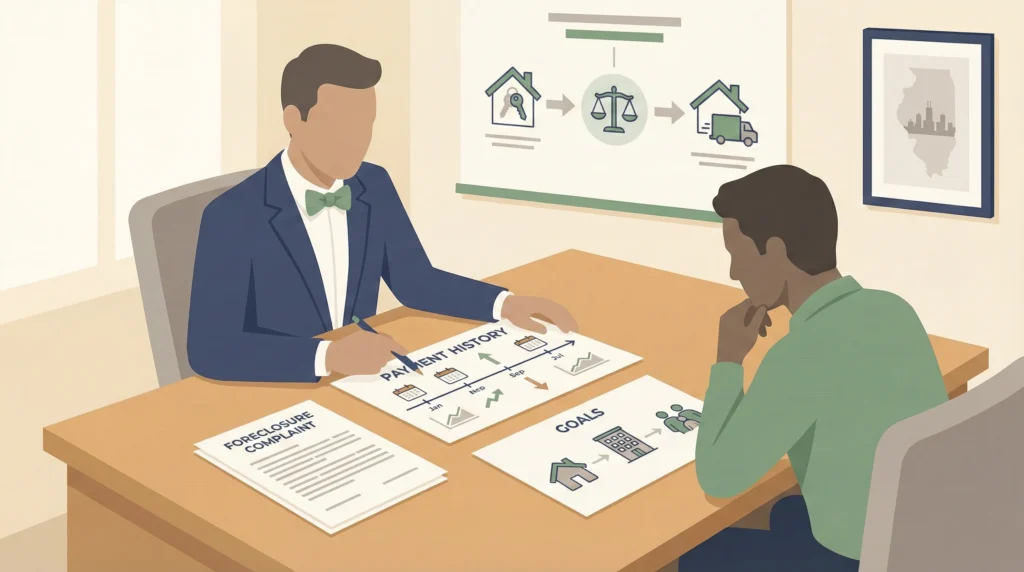
When Mahmoud takes on a foreclosure file, the first step is a deep, practical intake—not just “how many payments are you behind?” We look at your note and mortgage, your payment history, prior workouts or modifications, escrow changes, and the bank’s math in the complaint. We also look at your income, other debts, and what you want for your family over the next few years.
From there, we map out what the law and the numbers allow: realistic options to keep the home, managed exits, or hybrid plans that use time in the property to rebuild your footing. Only after that analysis do we decide how aggressive the court defense should be and how much energy goes into negotiation versus litigation.
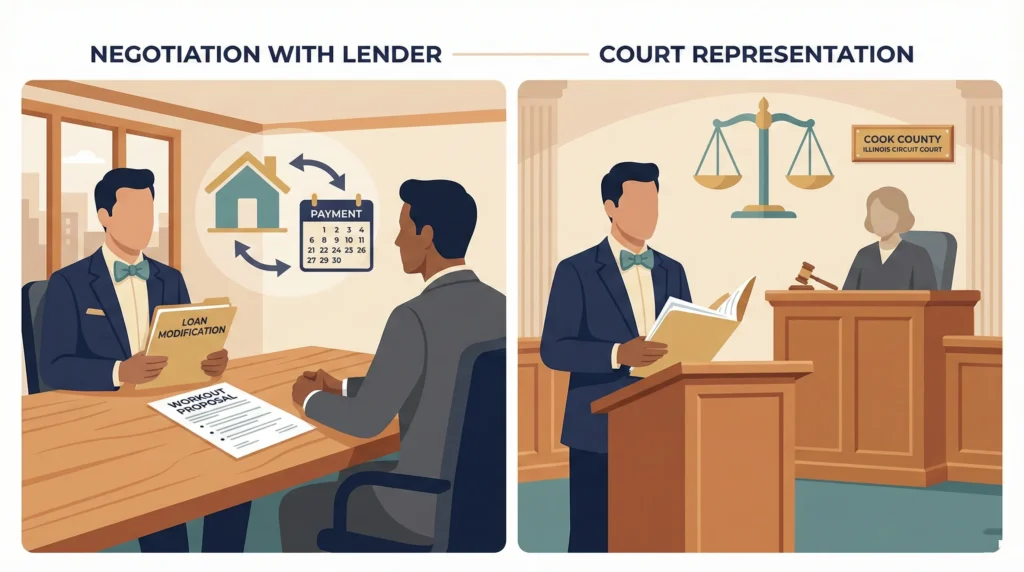
Many homeowners think they have to choose between “fighting the case” and “working with the bank.” In real Illinois files, those paths often run side by side.
As we defend the lawsuit, we also manage a second track focused on loss mitigation. That can include:
The trap is sending half-complete packets into a black hole while the lawsuit races ahead. Our job is to coordinate the litigation calendar with the lender’s workout process so one does not sabotage the other.
Some cases settle quietly. Others do not. When the lender will not budge or the numbers are wrong, you need someone who is comfortable in front of a judge. Mahmoud handles motions, hearings, and, when necessary, trial with an eye on both the legal issues and the practical impact on your life.
That can mean challenging standing, contesting fees and interest, objecting to sale confirmations that do not match the record, or simply making sure your side of the story is in the file when the court makes decisions. Even when the end result is a sale, how the case was handled along the way can change your timeline, your balance, and your stress level.
A foreclosure case without a plan turns into a string of confusing hearings. A short strategy call with Mahmoud can turn those dates into steps toward an outcome you choose.
Every file is different, but the framework we use is consistent. You should always know what stage you are in and what we are trying to accomplish there.
In broad strokes, our approach looks like this:
The goal is not to fight forever. It is to fight smart enough, long enough, to land in the best place available for you.
The ideal time to call The Bow Tie Attorney is as soon as you receive a summons or realize one is coming. But even if your case is already underway, it is rarely “too late” to get help.
You should reach out if:
Mahmoud’s job is to step into that gap—between what the papers say and what your life needs—and help you navigate the rest of the case with a clearer head.
If you are in an Illinois foreclosure or see one coming, you do not have to guess your way through it. A focused call with The Bow Tie Attorney can turn panic into a plan.
No. Being served means the case has started, not that it has ended. You still have the right to appear, respond, raise defenses, and pursue workout options. What is time-sensitive is your deadline to respond. Missing that can lead to a default judgment, which takes options off the table. That is why getting legal advice quickly—before that first deadline—matters so much.
Yes, and in many cases you should. The lawsuit and the loss-mitigation process are related but separate. Defending the case keeps pressure on the lender to handle your file correctly and buys time for a modification review. At the same time, pursuing a modification can create settlement paths that are not available if you only fight in court. The key is coordinating both tracks so they support, rather than undermine, each other.
Wanting time is a valid goal, especially if you need it to relocate, finish a school year, or stabilize other parts of your life. The question is how to get that time without accidentally making things worse. A defended case can often extend your timeline, but we also look at the cost, the stress, and what happens at the end. Sometimes the best move is to combine defense with a planned exit so that when the case does end, you are ready for it.
No lawyer can honestly guarantee that. Whether you keep the property depends on your income, your other debts, the value of the home, the lender’s policies, and the court’s rulings. What a good foreclosure defense lawyer can do is make sure the numbers are right, your rights are protected, and every realistic option—keeping the home, restructuring, or exiting well—is fully explored before the case ends.
Bring the foreclosure summons and complaint, your most recent mortgage statements, any loan modification or workout letters, and a rough list of your income and major monthly expenses. If you have a timeline of when you fell behind and any major events (job loss, illness, divorce), that helps too. You do not need a perfect file; you just need enough information for us to see the shape of your case.
Timelines vary based on the court’s calendar, how aggressively the lender pushes, and how the defense is handled. Contested cases often take many months, sometimes longer than a year. That time is not automatic, though. It is shaped by how quickly you respond, what issues are raised, and whether there are active settlement discussions. Part of our job is to use that timeline wisely so it serves your goals instead of just prolonging stress.

Stay ahead of industry changes with our comprehensive continuing education program. New courses added monthly, covering everything from legal updates to market trends.
Connect with like-minded professionals who share your commitment to excellence. Build relationships that last beyond any single transaction or market cycle.
Position yourself as the go-to expert in your market. Our advanced certifications and specializations help you stand out in an increasingly competitive landscape.
“Excellence is not a skill, it’s an attitude. In real estate, that attitude translates to meticulous preparation, unwavering ethics, and an uncompromising commitment to client success.”
— Mahmoud Faisal Elkhatib, The Bow Tie Attorney