
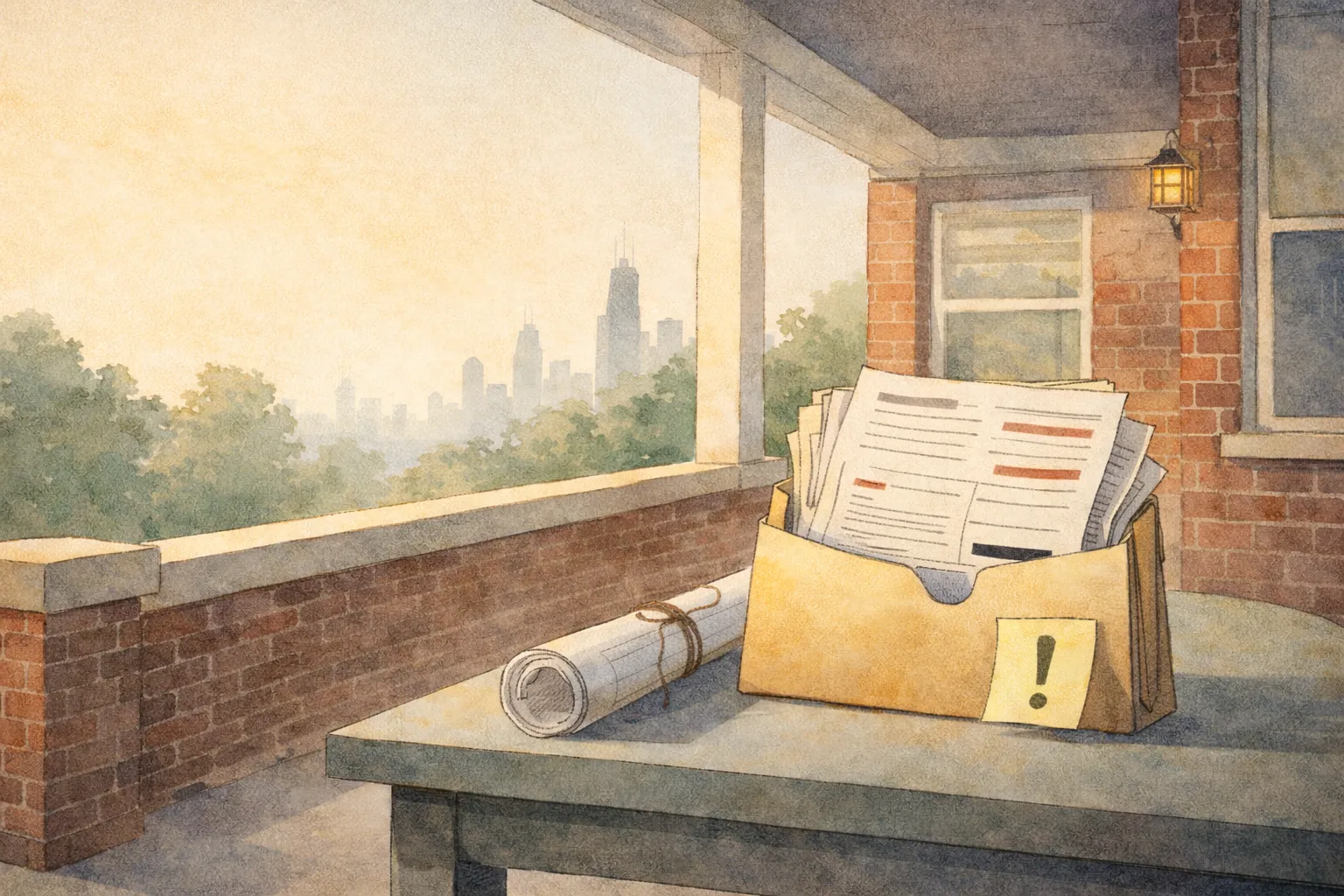
Story note: The story below is fictional and created for education. It is not a real client story and it does not describe any specific person.
Jorge is ready to sell his Chicago bungalow. He painted, staged, and picked a listing date. The day before photos, his agent asks one simple question. Are there any open permits.
Jorge says no, not that he knows of. Then they search the address record and find an older permit that never shows a final sign off. The work might be fine, but now the deal has a new problem. Not construction, documentation.
If you are selling in Chicago, this is the moment where you either get ahead of it or you spend weeks reacting. This post shows you how to get ahead of it.
Important: This article is general information, not legal advice for your specific facts.
The fastest way to protect your sale is to run a simple pre listing audit and build a clean file. We help sellers identify red flags early, gather proof, and choose the best path before the buyer ever asks.
Important: General information only, not legal advice.
Open permit usually means a permit was issued, but the record does not reflect a final inspection or a closed status. Sometimes it is a paperwork gap. Sometimes the work changed. Sometimes the contractor disappeared. Sometimes nobody scheduled the last inspection.
Old work usually means work was done years ago and you are not sure if a permit was pulled, or you cannot find proof it was signed off. Common examples in Chicago are electrical updates, basement finishes, porch and stair work, plumbing changes, and structural repairs.
Reality check: Buyers and lenders do not care that the work feels old. They care whether it was done correctly and whether the record is clean enough to trust.
This is why these issues matter during a sale. They create uncertainty. Uncertainty triggers extra requests. Extra requests create delays. Delays create price pressure.
Not every buyer will care, but many will. Here is the usual chain reaction.
The fix is not to argue. The fix is to build a clear record that makes the buyer feel safe saying yes.
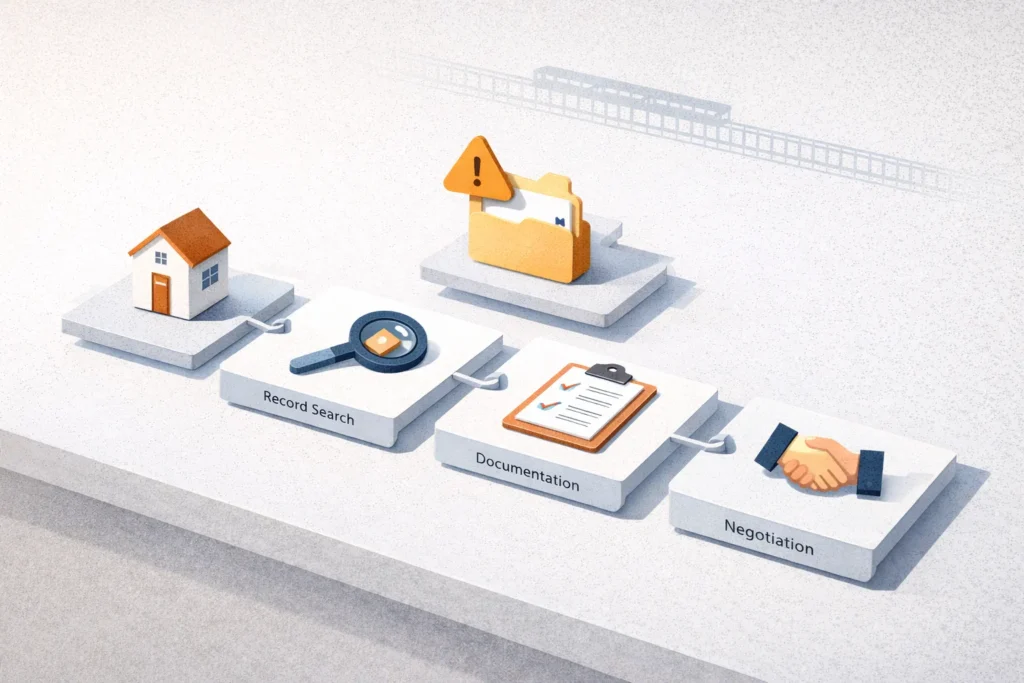
If you only do one thing this week, do this. Search your Chicago address for permit, inspection, and violation history. You want to know what the buyer will find before the buyer finds it.
Once you see the record, sort everything into three buckets.
Common seller mistakes that make it worse:
Chicago guidance is clear that starting work that requires a permit can lead to a stop work order and that work can only resume after obtaining the required permit. That matters for sellers because old unpermitted work can surface when a buyer asks questions or when the City record is reviewed.
Your best move is usually a calm, document driven plan. Figure out what work was done, whether a permit was required, and whether you can bring it into compliance. Sometimes that means applying for the right permit now. Sometimes it means an inspection path. Sometimes it means changing the deal terms so the buyer knowingly takes on the risk with the right pricing.
Important: Do not rely on rumors about what “does not need a permit.” Chicago publishes guidance on what work does and does not require a permit. Confirm it before you assume.
If a buyer asks about permits, you want to respond with a clean packet, not a long explanation. When the paperwork is organized, negotiations get easier and closing stays on schedule.
Sometimes you find out after you are under contract. That is not ideal, but it is workable if you move quickly and keep it professional.
Here are clean options sellers use in Chicago transactions, depending on timing and scope.

Whatever you choose, the theme is the same. Put it in writing, match it to real documents, and keep the timeline realistic.
These are solid starting points for Chicago sellers who want to verify permit and enforcement information. Copy and paste into your browser.
Compliance note: This article is general information as of the date you publish it. It is not legal advice. Procedures and interpretations can change, and the right strategy depends on your facts, your timeline, and the scope of work.
Before photos, before showings, before you fall in love with a closing date, run the record check and start building your proof packet. It is one of the easiest ways to protect your leverage.
Start with the City address record search tools for permits and inspections. If you see a permit with no final sign off, treat it as a flag and investigate what inspection or documentation is missing.
Not always. Some buyers will accept it with proof and a plan. The risk is delay. If the buyer or lender demands documentation you do not have, the closing timeline can slip.
You still need a strategy. Start by gathering what you can, then decide whether you can close out the record, whether a permit is required, and how to disclose and negotiate without overpromising.
As is does not mean silent. Sellers still have disclosure duties under Illinois law, and buyers can still negotiate based on risk. If you sell as is, do it with clear paperwork and clear expectations.
Illinois law requires a seller to supplement a prior disclosure report if the seller becomes aware of an error, inaccuracy, or omission prior to closing. See 765 ILCS 77 Section 30.
Do the address audit, gather whatever paperwork you have, and write a simple timeline of what work was done and when. Once the facts are organized, the right strategy becomes much easier to choose.

Stay ahead of industry changes with our comprehensive continuing education program. New courses added monthly, covering everything from legal updates to market trends.
Connect with like-minded professionals who share your commitment to excellence. Build relationships that last beyond any single transaction or market cycle.
Position yourself as the go-to expert in your market. Our advanced certifications and specializations help you stand out in an increasingly competitive landscape.
“Excellence is not a skill, it’s an attitude. In real estate, that attitude translates to meticulous preparation, unwavering ethics, and an uncompromising commitment to client success.”
— Mahmoud Faisal Elkhatib, The Bow Tie Attorney