
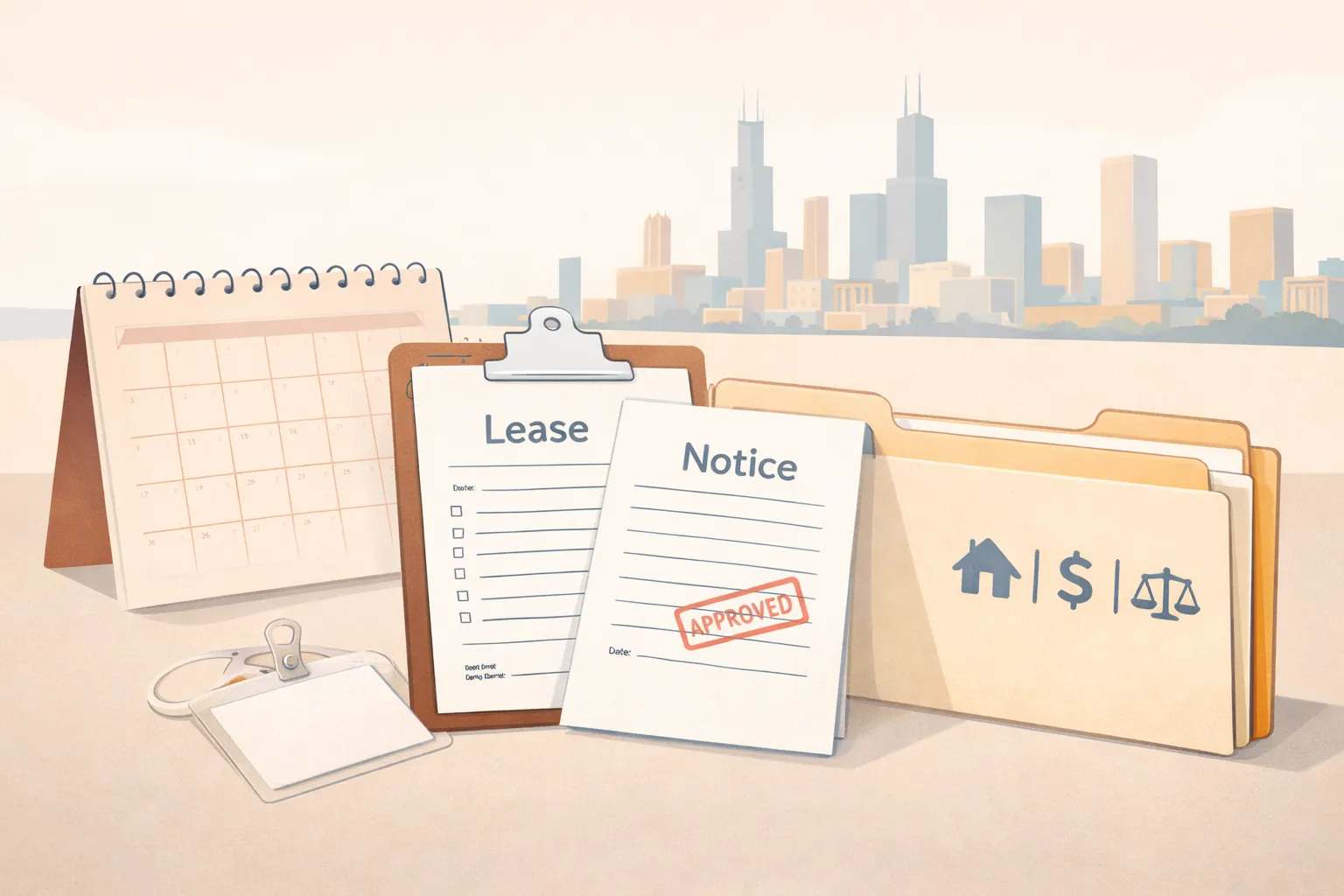
Most housing providers do not lose because they are wrong. They lose because the timeline is wrong, the notice is wrong, or the documentation is thin. In Chicago and Cook County, renewal and termination rules can extend notice periods, and notice defects can hand the tenant extra time in the unit, even when the landlord’s underlying point is valid.
This post is a practical guide for lease renewals, nonrenewals, five day rent notices, and the documentation judges expect. It is general information, not legal advice for your specific facts.
If you manage multiple units, you need a repeatable system, not a scramble. We help housing providers tighten renewal timelines, standardize notices, and build a documentation packet that holds up when the dispute reaches court.
Important: This article is general information, not legal advice for your specific facts.
Start with the core idea: in Chicago, the notice you give for a nonrenewal or a rent increase often depends on how long the tenant has lived in the unit. Chicago’s fair notice rules are commonly described as a 30, 60, or 120 day requirement tied to the length of the tenancy. If you miss the required notice window, the tenant may be allowed to remain in the unit for additional time.
Chicago fair notice page: Know Your Rights: Fair Notice Ordinance
Chicago code text example: Chicago Municipal Code 5 12 130
Best practice: build one calendar that assumes the longest notice window for your covered units, then you can tighten only when you confirm coverage and tenancy length. Most operational failures come from guessing.
A strong renewal process is simple:
Illinois law allows a landlord to demand rent and give written notice that the lease will be terminated unless payment is made within a time stated in the notice, which must be at least five days after service. That is the backbone of what most people call a five day notice.
Statute: 735 ILCS 5 Section 9 209
In Cook County, public guidance also describes a five day notice for nonpayment and highlights the tenant’s right to pay within that period to stay, which affects your negotiation posture and your ledger cleanup.
Cook County RTLO overview: Residential Tenant Landlord Ordinance
Practical documentation that reduces disputes:
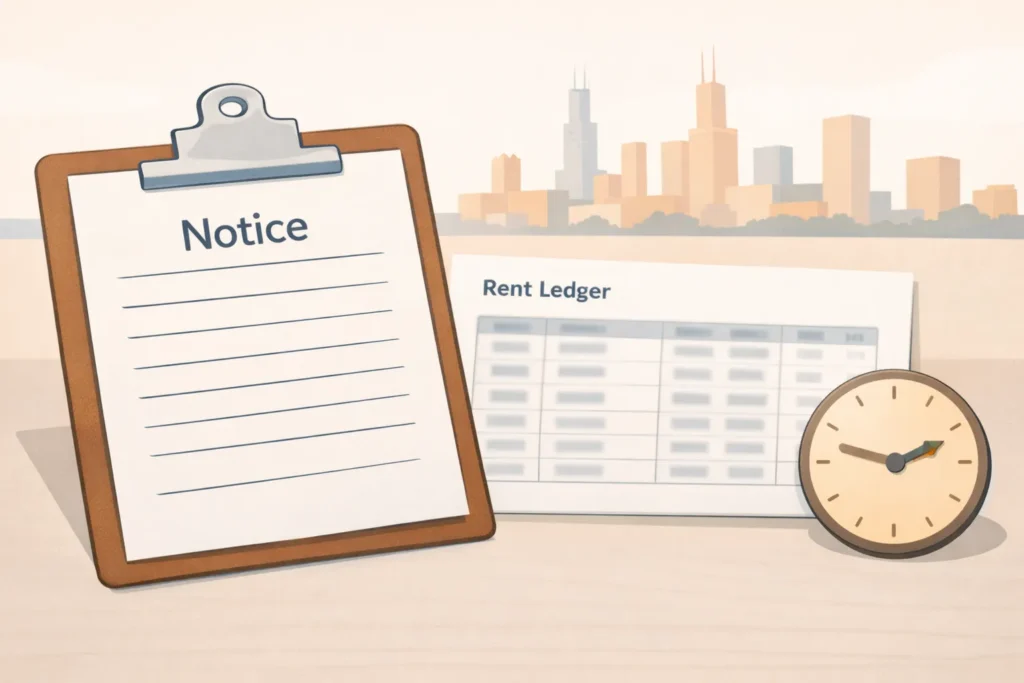
Nonpayment and lease violations are not the same problem, and they should not be handled with the same notice. Illinois provides a separate ten day notice framework for defaults in lease terms. If your issue is unauthorized occupants, pets, damage, noise, or other lease breaches, the file often rises or falls on the clarity of your proof and whether you used the correct notice path.
Statute: 735 ILCS 5 Section 9 210
Cook County public guidance describes a ten day notice for lease violations and references a right to cure within ten days, which changes your timing and your communications.
Cook County RTLO overview: Residential Tenant Landlord Ordinance
Common mistakes that create delays or denials:
If your property is in suburban Cook County and covered by the county ordinance, your nonrenewal notice window is commonly described as sixty days, and the county provides a remedy if the landlord fails to give the required notice. In plain terms, missing the window can mean the tenant may remain longer, with the same lease terms, which can throw off your sale timeline or your rent adjustment plan.
Cook County RTLO overview: Residential Tenant Landlord Ordinance
Cook County RTLO summary PDF: Summary of RTLO
Reality check: before you rely on state law defaults, confirm whether your unit is covered by Chicago rules, Cook County rules, or is excluded. Coverage and exemptions matter.
If you want fewer surprise continuances and stronger leverage, build the file the way a judge reads it: clear dates, clean numbers, and proof you can explain in two minutes.
A strong legal review is not only about quoting a statute. It is about deciding what the court can realistically do on your timeline, and what facts you can actually prove.

Renewals are not paperwork. They are risk control. The best operators in Chicago treat renewals like a quarterly process, not a last minute email.
When you do this well, you reduce disputes, shorten vacancy time, and protect your credibility when a dispute escalates.
We help housing providers turn renewals and notices into a repeatable system, with clear timelines and a court ready documentation packet.
Chicago commonly requires a longer notice period based on how long the tenant has lived in the unit, often described as 30, 60, or 120 days. Confirm the tenant’s length of occupancy and whether the unit is covered. City guide: Fair Notice Ordinance. Code text example: Chicago Municipal Code 5 12 130.
Cook County public guidance describes a sixty day nonrenewal notice for covered units, and the county summary explains a remedy if the landlord fails to give the required notice. See: Cook County RTLO and the RTLO summary PDF.
It is a written demand for rent that notifies the tenant the lease will be terminated unless payment is made within a stated time that is at least five days after service. Statute: 735 ILCS 5 Section 9 209.
Under the Illinois demand for rent statute, the notice is tied to termination unless payment is made within the stated period. Cook County public guidance also describes a right to pay within the five day period to stay. Statute: 735 ILCS 5 Section 9 209. Cook County overview: RTLO page.
Illinois provides a ten day notice framework for defaults in lease terms. Statute: 735 ILCS 5 Section 9 210. Cook County public guidance also describes a ten day notice path for lease violations: RTLO page.
At minimum: the signed lease and amendments, a clean rent ledger, the notice, proof of service, payment communications, and for violation cases, photos or inspection notes tied to dates. If your file is not clean, fix the file before you escalate.

Stay ahead of industry changes with our comprehensive continuing education program. New courses added monthly, covering everything from legal updates to market trends.
Connect with like-minded professionals who share your commitment to excellence. Build relationships that last beyond any single transaction or market cycle.
Position yourself as the go-to expert in your market. Our advanced certifications and specializations help you stand out in an increasingly competitive landscape.
“Excellence is not a skill, it’s an attitude. In real estate, that attitude translates to meticulous preparation, unwavering ethics, and an uncompromising commitment to client success.”
— Mahmoud Faisal Elkhatib, The Bow Tie Attorney