
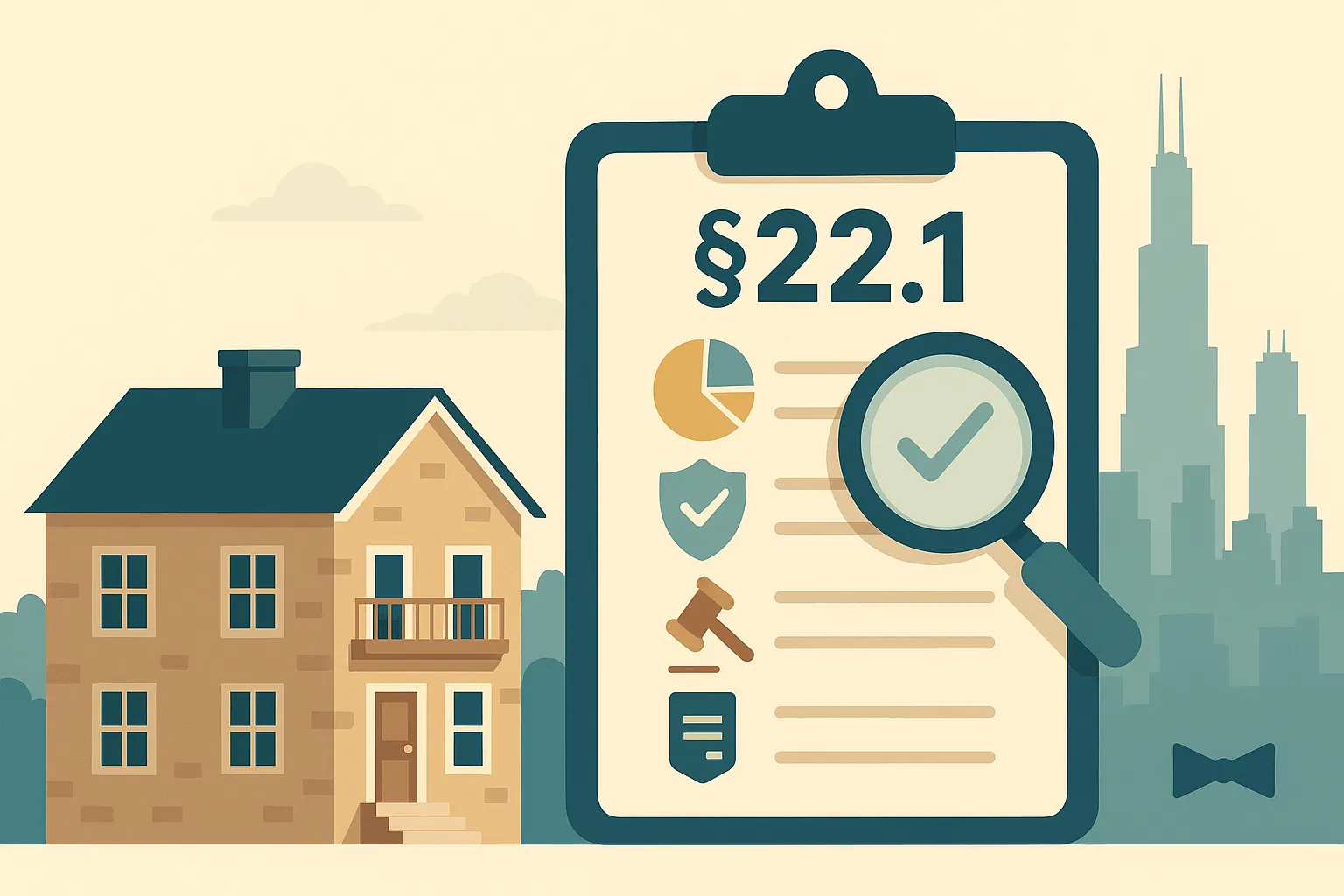
Association debt doesn’t behave like a normal bill. In Chicago condos and HOAs, lien priority, payoff letters, and §22.1 resale disclosures can make or break a closing or a foreclosure. This guide shows how The Bow Tie Attorney and Mahmoud Faisal Elkhatib turn confusion into a clean, underwritable plan.
Condo and HOA liens in Chicago sit at the intersection of governing documents, management workflows, and timing. Buyers want to avoid inheriting old debt. Sellers need a clean release. Lenders must fund once, fund cleanly. Associations expect prompt, accurate payment.
The Bow Tie Attorney, led by Mahmoud Faisal Elkhatib, treats association issues as a discipline of their own: we read the ledger like auditors, reconcile payoff math, anticipate limited “super-priority” traps, and turn the §22.1 package into real due diligence—not a checkbox.
Ready to move from uncertainty to underwriting?
Book a Chicago Association File Review with The Bow Tie Attorney. We gather the ledger and §22.1 package, issue a written action memo, coordinate the payoff refresh before funding, and push for the recorded release.
What an Association Lien Really Is
An association lien is the legal expression of unpaid obligations tied to a unit: regular assessments, special assessments, late fees, interest, authorized fines, attorney’s fees, and costs.
The heart of the file is the ledger. If the ledger is accurate, your payoff can be accurate. If the ledger is messy, your numbers and timeline become unstable.
How Faisal starts the file
- Ledger scrub: dates, charge categories, payment application, disputed items, pending legal fees.
- Authority check: declaration/bylaws support for each charge type (e.g., fines, attorney’s fees).
- Paper trail: notices/opportunity to cure, and whether the lien claim follows required steps.
if there isn’t enough money to pay everyone, who is first in line? In Illinois, property taxes and earlier-recorded mortgages typically sit above association liens—with narrow, time-bound exceptions. Certain condo scenarios recognize a limited “super-priority” slice of assessments when statutory conditions are satisfied.
How The Bow Tie Attorney derisks priority
- Confirms if the limited priority slice is even available on the facts.
- Verifies notices, timing, and categories claimed as lienable.
- Aligns title underwriting with today’s ledger, not last month’s PDF.
§22.1 Resale Disclosures — Read It Like Diligence
Most buyers know they need a §22.1 package; very few know how to read it like underwriting. The Bow Tie Attorney—led by Mahmoud Faisal Elkhatib—treats §22.1 as a decision tool, not a form. We align the document with the ledger and the payoff letter, and we translate the findings into simple outcomes: proceed, proceed with escrow, renegotiate, or walk.
At its core, §22.1 should answer three questions: what is owed today on this unit, what is likely to hit tomorrow, and how resilient is the association when stress arrives. If any of those answers are unclear, the disclosure is incomplete or stale and your closing plan is not yet safe.
Ready to move from uncertainty to underwriting?
Book a Chicago Association File Review with The Bow Tie Attorney. We gather the ledger and §22.1 package, issue a written action memo, coordinate the payoff refresh before funding, and push for the recorded release.
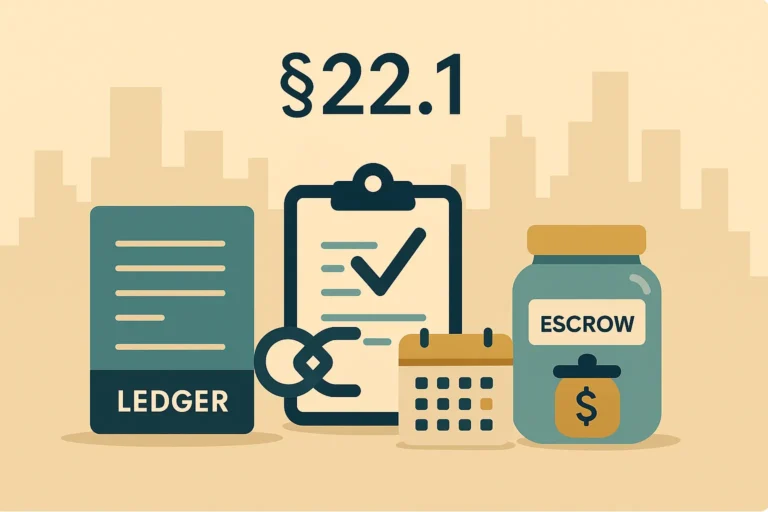
Faisal’s workflow begins with a quick cross-walk: every number in §22.1 must reconcile with the association ledger and the management payoff/estoppel. If the three don’t match, we don’t guess—we request written clarification from management so title will accept the correction and clear exceptions.
Field tests we run before you trust the document:
- Age test: if the §22.1 is older than ~30 days, request a refresh—especially when closing dates slip.
- Calendar test: map the closing date against good-through dates and the next special-assessment installment.
- Consistency test: does the budget/reserves narrative match the board minutes, recent owner notices, and insurance renewals?
When reading reserves, context matters. A “big number” can still be thin once you weigh upcoming capital projects, insurance shocks, or elevator overhauls. Likewise, low delinquency today can flip quickly in buildings with high investor concentration or strict rental caps that limit DSCR strategies.
Red flags that deserve a pause (and often an escrow):
- Thin reserves with known capital work on the horizon.
- Staged specials where an installment lands within 0–30 days after closing.
- A delinquency cluster (multiple units chronically late), which stresses cash flow.
- Insurance volatility (large premium spikes, unusual exclusions, or high deductibles).
- Leasing caps already at capacity, undermining rental or DSCR exit plans.
- Active litigation with fee exposure not reflected in the budget.
The point is not to kill deals; it’s to price risk and structure the file. When facts justify it, we’ll recommend a limited escrow tied to a concrete release event—e.g., proof of payment of the next special installment or the post-renewal insurance certificate.
Closings: How We Get You to “Clear”

A clean closing is choreography. The Bow Tie Attorney:
- Orders payoff and §22.1 early; calendars the good-through date.
- Reconciles new legal fees or charges added just before funding and requests revised payoff.
- Confirms move-in/out deposits, elevator holds, or orientation fees that could appear on the final figures.
- Obtains paid-assessment letter and, where applicable, a recorded lien release immediately post-payment.
- Coordinates with title so underwriting matches the current file, not an outdated ledger.
Foreclosures: Who Pays What After Sale
After judicial sale, obligations split: purchasers often take new assessments going forward, and in some condo scenarios a limited pre-sale slice may still attach if statutory steps were satisfied.
For investors, we scope post-sale exposure. For associations, we structure claims to be collectible—on schedule, with records to back them up.
For Private & Hard-Money Lenders
Ready to move from uncertainty to underwriting?
Book a Chicago Association File Review with The Bow Tie Attorney. We gather the ledger and §22.1 package, issue a written action memo, coordinate the payoff refresh before funding, and push for the recorded release.
Association risk can kill a refinance exit or distort DSCR. The Bow Tie Attorney underwrites the building’s dues environment: reserves posture, special-assessment cadence, arrearage trends, leasing caps.
We recommend escrows where specials are known, and we shoulder the management back-and-forth so your payoff reflects reality on the day funds move.
Common Pitfalls We Fix
- Stale payoffs carried into funding day.
- Email “numbers” used instead of formal payoff letters.
- Special assessments paid for the month but not the next installment due right after closing.
- Attorney fees hitting the ledger after the payoff was issued—without a revision.
- Release assumed but never requested or recorded.
What The Bow Tie Attorney Actually Does
We operate like specialized triage for association problems:
- Obtain & scrub the ledger and all management letters.
- Lock down categories and numbers in writing.
- Align title—remove or narrow exceptions based on corrected facts.
- Supervise payment and chase the recorded release immediately.
- In foreclosure, scope purchaser exposure and negotiate with associations for practical, collectible outcomes.
Why Faisal (The Bow Tie Attorney)
Mahmoud Faisal Elkhatib turns messy, multi-party files into clear checklists. He speaks the languages of associations, managers, title underwriters, lenders, and investors—because he works with all of them.
Clients choose The Bow Tie Attorney when the calendar is tight, the numbers are moving, and “we’ll see” isn’t good enough. Expect fast ledger analysis, candid risk grading, and clear instructions your closer can act on—today.
FAQs
Do HOAs and condos follow the same rules?
Not exactly. Statutes and governing documents differ. We verify authority for each charge and confirm whether it’s truly lienable.
Can an association block a sale if someone is behind?
They can slow it—by withholding paid-assessment letters or stacking move fees. With a disciplined payoff-and-release plan, most closings proceed.
After foreclosure, do I start fresh?
Often you’re responsible going forward; in specific condo scenarios, a limited pre-sale slice may still attach if particular steps were satisfied. We check, don’t guess.
Are attorney’s fees automatic?
Only if authorized and properly documented. We confirm both before they land on your settlement statement.
Ready to move from uncertainty to underwriting?
Book a Chicago Association File Review with The Bow Tie Attorney. We gather the ledger and §22.1 package, issue a written action memo, coordinate the payoff refresh before funding, and push for the recorded release.
Sources
- Illinois Courts (statewide court forms, rules, and procedural guidance).
- Circuit Court of Cook County (local programs, including foreclosure mediation resources and division-specific practices).
- Cook County Clerk of the Circuit Court (case lookup, e-filing access, and records retrieval).
- Cook County Assessor (assessments, exemptions; property tax context for the unit/building).
- Cook County Treasurer (tax status, delinquencies, and payment history).
- Illinois Department of Insurance (policy verification, COI questions, and premium changes impacting association budgets).