
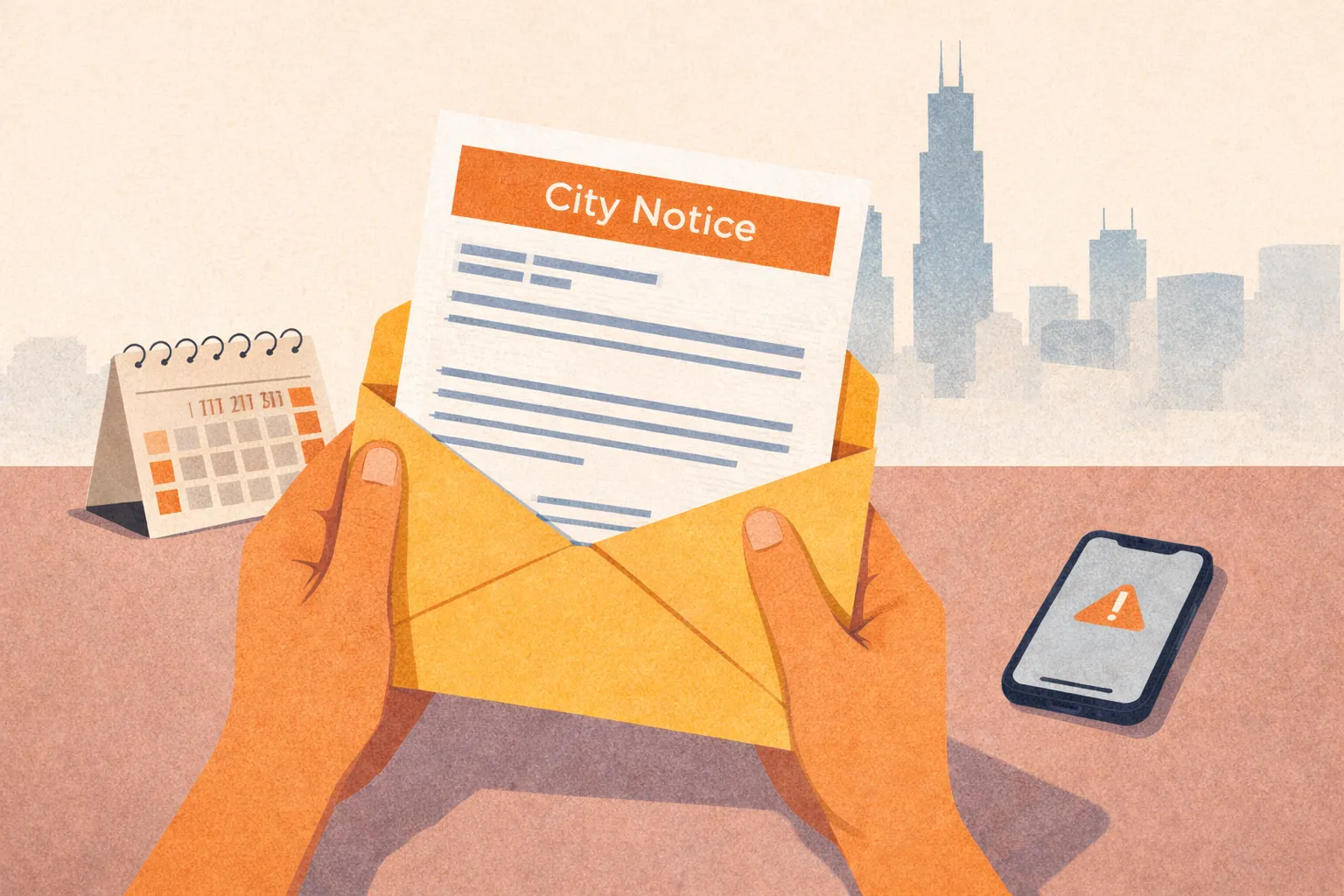
You open your mail or see a notice posted and your stomach drops. It says building code violation, there is a hearing date, and suddenly you are picturing fines and worst case scenarios.
Take a breath. Most situations improve fast when you do two things early. First, you get clear on what the City is alleging. Second, you build a clean, organized response instead of reacting emotionally.
This post is general information. It is not legal advice for your specific facts.
If you want fewer surprises, the goal is simple. We tighten your timeline, help you organize proof, and make sure you show up with a clean file and a realistic plan.
Important: General information only, not legal advice.
Chicago building code enforcement is a step by step process. It can start with an inspection, move into notices, and in many cases end up in an administrative hearing if the City believes the issue was not resolved in time.
The City’s materials describe this as a multi department process and emphasize that owners are given due process through the enforcement path.
Key point: The notice is not just a warning. Treat it like a deadline letter. Even if you plan to fix everything, you still need to manage the process.
Look for three items right away.
This is the fast, boring, effective checklist. Do these before you start calling everyone in a panic.
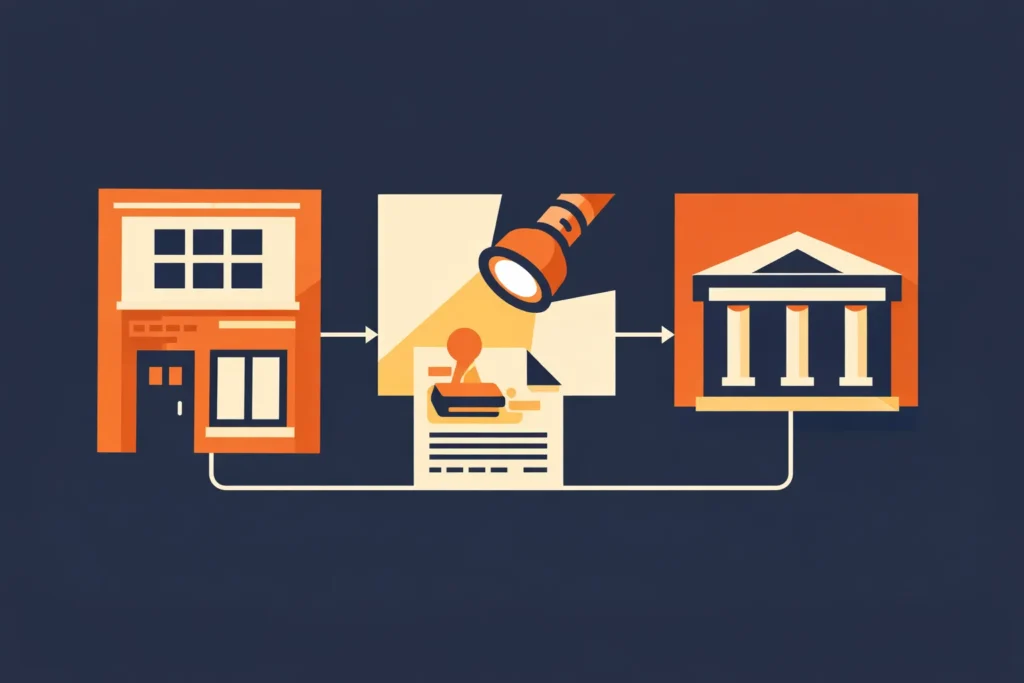
Chicago runs many building code matters through the Department of Administrative Hearings. The City explains that a notice typically tells you the alleged violation and the date, time, and location for your hearing. If you miss it, you can end up with a default.
In some building code processes, Chicago rules also describe an option to submit a defense position statement within a set time window, with exhibits like permits, photos, affidavits, and reports.
Where people get burned:
If the notice is tied to work being done without the right permit, Chicago can issue a stop work order and require you to obtain permits before work can resume. Chicago’s permit guidance warns that work should not continue until the permit issue is resolved.
The municipal code also includes provisions that connect stop work orders with fees and penalties when a new or revised permit is required after an order is issued.
The goal is not to argue louder. The goal is to show up organized, credible, and ready with proof.
Chicago’s code describes specific defenses in building code violation cases. One example is showing the alleged violation did not exist at the time of the inspection. Another common theme is proving compliance and asking for verification through reinspection when appropriate.

This is how you build credibility.
Use these official sources to confirm the current process and requirements. Procedures can change, so always check the latest version.
Compliance note: This article is general information as of the date you publish it. It is not legal advice. Deadlines and procedures can change based on the department, the violation type, and the assigned hearing process.
Calendar the hearing and gather proof. Most outcomes improve when you show up prepared and on time.
Chicago’s 311 system is one official way to report building violations. If there is immediate danger, use emergency services first, then document what you reported and when.
The City’s hearing materials warn that failure to appear can lead to a default outcome and penalties. If you miss it, address it immediately because waiting usually makes it harder.
Sometimes yes. If the underlying problem is unpermitted work, Chicago guidance says work can only resume after obtaining required permits. Do not assume a quick fix is allowed without checking.
Yes, and you should. Bring clear photos, permits if available, invoices, contractor information, and any inspection or reinspection paperwork. Proof matters.
Fixing the issue is often necessary, but you still have to handle the process. That can include reinspections, paperwork submissions, and appearing at a hearing when required.
Start with the notice and a timeline. Write down the dates, collect documents, take photos, and then decide whether you need professional help based on the hearing date and the complexity of the violations.

Stay ahead of industry changes with our comprehensive continuing education program. New courses added monthly, covering everything from legal updates to market trends.
Connect with like-minded professionals who share your commitment to excellence. Build relationships that last beyond any single transaction or market cycle.
Position yourself as the go-to expert in your market. Our advanced certifications and specializations help you stand out in an increasingly competitive landscape.
“Excellence is not a skill, it’s an attitude. In real estate, that attitude translates to meticulous preparation, unwavering ethics, and an uncompromising commitment to client success.”
— Mahmoud Faisal Elkhatib, The Bow Tie Attorney