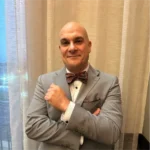
Riko Patel has built a residential real estate portfolio of approximately 17 properties by focusing on cash flow, equity, risk, and disciplined deal analysis. He explains why cash on cash return is one of his first filters, how he combines cash purchases, hard money, refinancing, and partnerships, and what he learned from deals involving a dishonest partner, unpaid subcontractors, unexpected construction costs, and private lending. Mahmoud Faisal Elkhatib and Riko also discuss inspections, lien waivers, loan documentation, collateral, and why protecting the downside matters just as much as finding the next opportunity.
Riko Patel does not begin by asking whether a property looks inexpensive. He begins by comparing the cash required with the cash the property can realistically produce.
Early in his investing career, he purchased properties in the fifty thousand to seventy five thousand dollar range and sometimes used cash instead of financing. As the portfolio grew, he moved into higher priced acquisitions and began using hard money, refinancing, partnerships, and other financing structures depending on the deal.
Riko says he generally wants cash on cash returns in the high teens before a property becomes interesting. In stronger neighborhoods, he may accept a lower return when the equity position and long term value justify it.
The first question is not whether the property can make money. It is whether the return justifies the amount of cash and risk required.
Partnerships, private loans, renovation projects, and off market acquisitions can create risks that are difficult to repair after the transaction closes. EV Häs helps Chicagoland investors review ownership, contracts, collateral, title, financing, and exit rights before significant capital is committed.
Mahmoud Faisal Elkhatib is a Chicagoland real estate and foreclosure attorney, investor, entrepreneur, and former real estate broker. His work includes real estate transactions, foreclosure matters, title disputes, building code cases, distressed properties, and complicated investment structures.
Through The Bow Tie Edge, Mahmoud examines how legal protection, financing, business strategy, and real estate operations work together when investors move beyond simple purchases.
Riko Patel is a real estate investor, investment partner, and private lender with a background in corporate America and an MBA from DePaul University. His residential portfolio includes single family homes, townhomes, and condominiums acquired through the MLS, wholesalers, attorneys, off market opportunities, and partnerships.
After more than a decade of investing, Riko has accumulated approximately 17 properties and now focuses heavily on disciplined underwriting, downside protection, mentorship, and helping newer investors avoid mistakes he had to learn through experience.
Riko first analyzes a property as though he were investing his own cash without leverage. He wants to know whether the underlying asset produces an acceptable return before debt changes the calculation.
For example, if the total cash invested after purchase and renovation is one hundred thousand dollars, he may want approximately eighteen thousand to twenty thousand dollars in annual net cash flow before considering the property attractive.
Only after the property passes that initial test does financing become another tool. Hard money may help acquire and renovate the property, followed by longer term refinancing once the asset is stabilized.
Financing can improve the return on a good deal. It does not automatically convert a weak deal into a good one.
One of Riko’s most difficult investments involved a joint venture on a property in Palatine. His partner controlled the primary financing while Riko contributed significant capital and participated in the renovation.
The property was eventually sold without producing meaningful profit. The larger problem was that Riko says his partner retained more than one hundred thousand dollars that should have been returned to him.
The dispute continued through arbitration and litigation for years. Riko ultimately recovered money, but the financial recovery could not replace the time, stress, lost sleep, and investment opportunities consumed by the conflict.
A profitable project cannot compensate for a partnership structure that leaves one party unable to protect the money already invested.
Riko’s primary lesson from the partnership dispute is simple. Personal trust should never replace documentation.
He recommends involving attorneys before the investment begins, documenting the ownership relationship, understanding who controls the property and proceeds, and creating protections for the capital being contributed.
Investors should also understand what happens if the partners disagree, one person stops contributing, the property is sold, additional capital is required, or one party wants to exit.
The correct documents depend on the transaction and ownership structure, but the conversation emphasizes one principle. Conflict planning belongs at the beginning of the relationship, while everyone still expects the deal to succeed.
Another costly lesson came from paying a general contractor who failed to pay subcontractors. That experience changed the way Riko manages construction payments.
He now pays closer attention to the people actually performing the work, verifies payment progress, and uses lien waivers as part of the process. The objective is to create evidence showing what work and payment a contractor or subcontractor is acknowledging.
Construction projects can also create unexpected costs after work begins. Riko describes situations involving sewer lines and other repairs that were not fully anticipated during the original budget.
A renovation budget needs both documentation and contingency because the property can create surprises even when the contractor does not.
Riko learned another important lesson while acquiring a property he already knew well. Because he was familiar with the asset, he did not perform the level of inspection he would normally require.
Unexpected conditions later created additional construction work and disruption while a tenant occupied the property. Insurance helped address part of the loss, but the experience reinforced the value of inspecting even when the seller has already made clear that no repair credit will be offered.
An inspection is not valuable only because it creates negotiation leverage. It helps the investor estimate the true cost of ownership and decide whether the deal still makes sense before closing.
Knowing about the problem before closing can be valuable even when the seller refuses to pay for it.
Private loans can involve mortgages, guarantees, collateral, defaults, assignments, rents, and remedies that should be coordinated before funds are released. EV Häs helps lenders and investors structure documentation around the transaction instead of waiting until a default exposes what the documents failed to address.
Riko also lends private capital, but he evaluates the opportunity from the perspective of an investor before becoming the lender.
If the underlying property would not make sense as one of his own investments, he generally does not want to lend against it. He also evaluates the borrower, experience, reputation, collateral, and available equity.
Earlier experiences taught him that good intentions are not enough. A borrower may genuinely intend to repay the loan and still lack the experience, liquidity, or execution required to complete the project.
Riko now uses more detailed documentation and professional review when lending. The conversation also explores additional protections that may become relevant depending on the transaction, including guarantees, collateral rights, default provisions, and properly structured remedies.
After building his own portfolio and learning from difficult transactions, Riko increasingly wants to help newer investors avoid repeating the same mistakes. His objective is not simply to acquire more properties. It is to use the experience accumulated across the portfolio to make the next investment more disciplined than the last.
Cash on cash return compares the annual cash produced by an investment with the amount of cash the investor has contributed. Investors may use it as one way to compare real estate opportunities with other uses of their capital.
The agreement can establish ownership, capital contributions, management responsibilities, distributions, additional funding obligations, decision making authority, exit rights, and procedures if the partners disagree.
Lien waivers can help document that a contractor or subcontractor has received payment connected with specific work. Construction payment procedures should be reviewed carefully because mechanics lien rights and waiver requirements are governed by applicable law.
Yes. An inspection may reveal structural, plumbing, electrical, sewer, roofing, mechanical, or other conditions that affect the investment budget. Even when the seller will not repair the problem, the information helps the buyer decide whether the acquisition still makes financial sense.
A private lender may evaluate the property value, purchase price, renovation budget, expected exit, borrower experience, available equity, repayment ability, collateral, and legal documentation. The exact requirements depend on the lender and transaction.