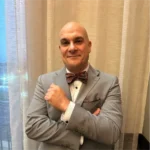
Kayla Easley brought the discipline of military training, the resilience of a professional dancer, and years of customer service experience into her real estate career. She shares how those experiences prepared her for one of her earliest transactions, when a burst pipe flooded the property during the final walkthrough only an hour before closing. Mahmoud Faisal Elkhatib and Kayla discuss pressure, mentorship, communication, and why successful real estate professionals must stay calm when the transaction stops going according to plan.
Kayla Easley entered real estate with an unusual combination of experience. She had completed military training, studied and taught several forms of dance, managed sales relationships, and learned how to perform under pressure.
Those careers may appear unrelated, but each one developed a skill that became valuable in real estate. The military taught her discipline. Dance taught her how to handle rejection and continue performing. Sales taught her how to communicate with clients and guide them through an important decision.
A final walkthrough can reveal problems that were not visible when the contract was signed. EV Häs helps Chicagoland buyers understand their options, coordinate with the other professionals, and protect the transaction when unexpected property damage appears before closing.
Mahmoud Faisal Elkhatib is a Chicagoland real estate and foreclosure attorney, investor, entrepreneur, and former real estate broker. His work includes residential and commercial transactions, foreclosure matters, building code cases, and complicated property disputes.
Through The Bow Tie Edge, Mahmoud brings together professionals who can explain what happens when real estate transactions move beyond the contract and into unexpected practical problems.
Kayla Easley is a real estate broker with eXp Realty who serves clients throughout the Chicagoland area and other parts of Illinois. She entered the military after high school, later studied and taught dance, and worked in sales before earning her real estate license in 2020.
Kayla now uses that combined experience to guide buyers and sellers, mentor newer agents, and help clients remain focused when a transaction becomes stressful or uncertain.
Kayla joined the military immediately after high school because she wanted a challenge. Her training included physically and mentally demanding situations that required her to remain focused even when she felt overwhelmed.
She describes an exercise inside a gas chamber where she incorrectly replaced her mask and began to panic. A drill sergeant forced her to recognize that she could still breathe and needed to regain control.
The lesson was not that pressure disappears. The lesson was that she could continue functioning while the pressure was happening.
Kayla believes that experience helped her develop thicker skin, avoid taking every problem personally, and remain prepared in a profession where clients expect immediate answers.
Dance had been part of Kayla’s life since childhood. After leaving the military, she returned to that passion and studied styles including ballet, tap, jazz, contemporary dance, African dance, and musical theater.
Performance requires discipline, repetition, physical control, and the ability to recover when an audition or performance does not go as expected. Kayla later recognized that the same mindset applies to sales and real estate.
A lost client, rejected offer, delayed closing, or failed transaction cannot become the end of the career. The professional must learn from the experience, return to the work, and prepare for the next opportunity.
Before becoming a broker, Kayla also worked in customer service and commission based sales. She managed sales for a company offering playground systems and recalls selling a set valued at approximately seventeen thousand dollars.
That experience helped her understand how to listen to a buyer, explain value, respond to concerns, and remain comfortable in a commission based environment.
When the real estate industry captured her interest, she used the isolation of 2020 to complete her education, obtain her license, and begin building a new career.
Her move into real estate was not a complete restart. It was the point where discipline, performance, teaching, and sales came together.
During Kayla’s second real estate transaction, she represented a buyer purchasing a home in the middle of winter. The parties arrived for the final walkthrough expecting to confirm the condition of the property and proceed to closing.
Instead, water began pouring through the home. The pipes had burst, and the problem was discovered approximately one hour before the scheduled closing.
Kayla was still new to the profession, and her clients were looking to her for direction. Rather than pretending to have an immediate solution, she contacted the attorney and brought the right professionals into the conversation.
The parties obtained information about the repairs, addressed the cleanup, and created an arrangement intended to hold the seller responsible for the necessary work. The transaction still closed, although the buyers could not immediately move into the property.
The purpose of a final walkthrough is to confirm that the property remains in the expected condition before ownership and money change hands. It gives the buyer one final opportunity to identify new damage, missing items, unfinished repairs, or other material changes.
A problem discovered during the walkthrough does not always mean the deal must end. Depending on the circumstances, the parties may delay closing, negotiate repairs, hold funds, document additional obligations, or create another solution acceptable to the buyer, seller, lender, and attorneys.
The important step is to stop and investigate before proceeding as though nothing happened.
Closing on schedule is not more important than understanding the condition of the property being purchased.
When damage appears before closing, the responsibilities, repair requirements, funds, deadlines, and available remedies should be clearly documented. EV Häs helps buyers evaluate the legal options and structure a solution that does not depend entirely on what someone promises to do later.
Kayla describes real estate as a career that can be rewarding and unpredictable at the same time. Clients see polished listings and successful closings, but they may not see the emotional pressure, rejected offers, urgent phone calls, failed inspections, and unexpected property damage behind the scenes.
Mentorship helped Kayla learn how to manage those situations. After receiving guidance during her first transactions, she began mentoring other agents and helping them navigate the same uncertainty.
The burst pipe did not end her career. It became one of the experiences that confirmed she could remain in the profession, rely on the right team, and continue learning through difficult transactions.
A final walkthrough allows the buyer to inspect the property shortly before closing and confirm that its condition has not materially changed. It may also be used to confirm that agreed repairs were completed and that included items remain at the property.
The buyer should immediately inform the broker and attorney, document the damage, determine the likely repair scope, and avoid proceeding until the parties understand how the problem will be resolved.
Not necessarily. The available options depend on the contract, the extent of the damage, the lender’s requirements, the insurance situation, and what the parties are willing to negotiate. The closing may proceed, be delayed, or require another documented arrangement.
In some transactions, the parties may agree to hold funds or create another arrangement for unfinished work. The amount, release conditions, deadlines, and responsibilities should be documented and coordinated with the attorneys, lender, and closing professionals.
Conditions can change after the inspection and before closing. A final walkthrough may reveal water damage, missing fixtures, incomplete repairs, debris, occupancy problems, or other issues that should be addressed before the transaction is completed.