
Story note: The story below is fictional and created for education. It is not a real client story and it does not describe any specific person.
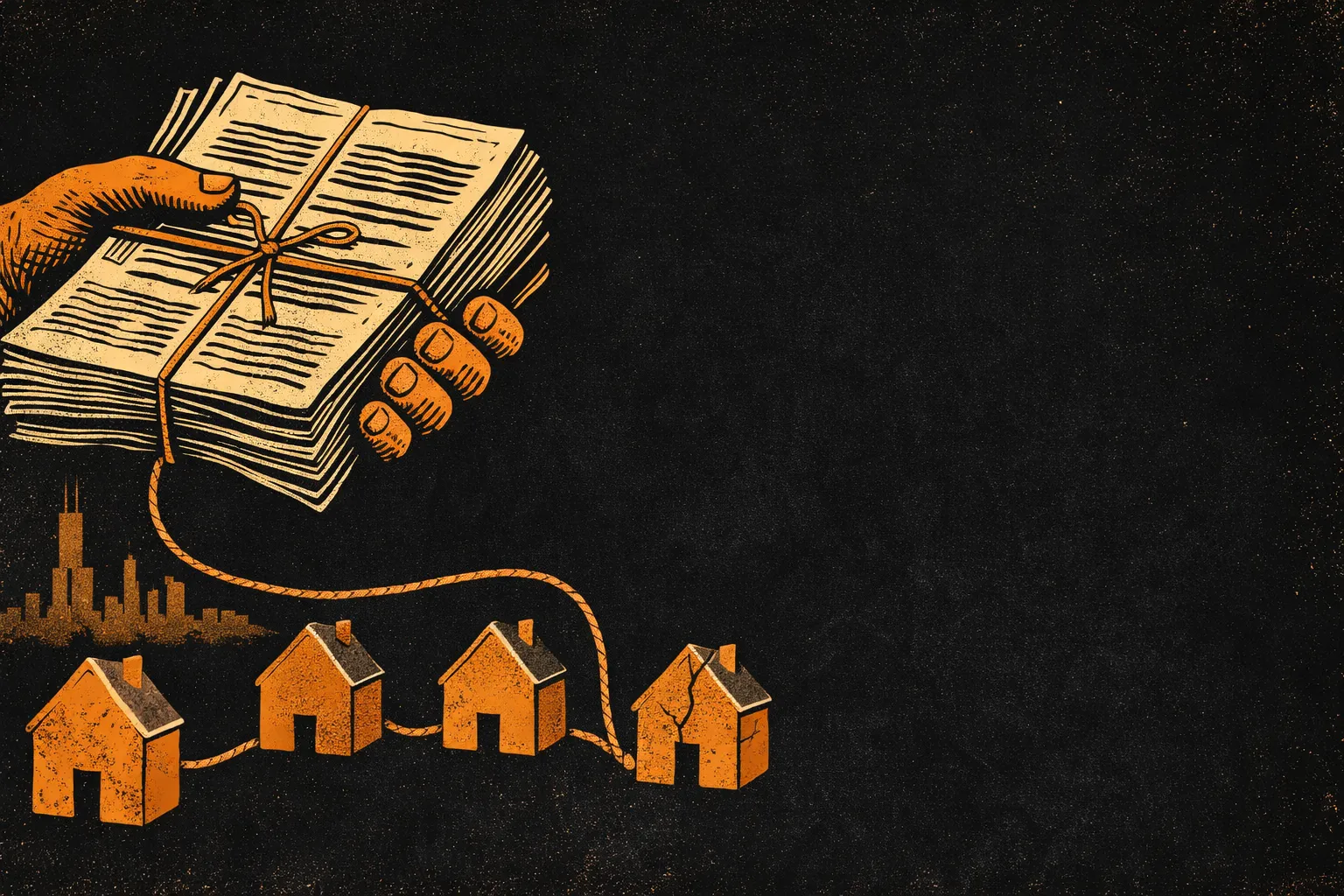
A private lender funds four rehab loans for the same investor. Three are going fine. One starts slipping. The budget breaks, the timeline breaks, then the payments break.
The lender thinks, fine, I will recover from the other deals. The borrower is making money on a different property. But the lender’s documents do not connect the loans. No cross default. No cross collateralization. So one loan goes bad and the lender has to take the whole hit on that one file, even while the borrower is profitable elsewhere.
That is the moment Faisal is calling out in his clip. Not that private money lending is bad. That private money lending without clean documents is risky in a very avoidable way.
Important: This article is general information, not legal advice for your specific facts.
If you are funding multiple loans to the same borrower, your documents should work like a system, not like isolated one off deals. We help lenders tighten the file so the recovery plan is clear before anything goes wrong.
Important: General information only, not legal advice.
Most lenders do not lose money because they picked the wrong property. They lose money because they assumed the paperwork would protect them automatically.
When a borrower runs multiple rehabs, the real risk is not just one house. It is the borrower’s entire portfolio behavior. If your docs treat each loan like it lives on an island, you are betting that every single project will go perfectly.
Hard truth: If you lend like a professional, your documents have to work like a professional system. Otherwise you are just hoping the borrower stays nice when things get stressful.
This is why Faisal’s point matters. You should not be hunting for a clause after the default. You want the clause built in from day one, so the leverage exists the moment the borrower starts slipping.
Cross default means a default on one obligation can trigger a default on other related obligations. In practical terms, if the borrower misses payments on Loan A, your documents can treat that as a default on Loan B, Loan C, and Loan D, depending on how the agreements are written.
Why lenders use it. Because borrowers shift money between projects. A borrower can be behind on one file while pushing money into another. If your documents do not connect the loans, you can get stuck watching the borrower win on one property while you take a loss on another.
Why borrowers should care. Because cross default raises the stakes. One mistake can threaten the entire relationship. That is why it needs to be negotiated clearly, not hidden in boilerplate.

Cross collateralization means collateral from one loan can secure obligations under other loans. In other words, the properties can support each other, depending on the structure.
This is the difference between a lender who can recover in a calm, planned way, and a lender who is forced to fight one broken file at a time.
Where people mess this up:
In Illinois, enforcing real estate collateral typically means dealing with judicial processes, and that can take time. That is one reason private lenders in Chicago need strong up front documents and clean proof, because you do not want to discover gaps after you are already in enforcement mode.
If you are lending on what is truly a business purpose deal, some consumer disclosure rules may not apply. For example, Regulation Z exempts certain business purpose credit. But the moment you drift into consumer purpose lending, your compliance obligations can change fast. Source for Regulation Z exemption: https://www.ecfr.gov/current/title-12/chapter-X/part-1026/section-1026.3 and https://www.consumerfinance.gov/rules-policy/regulations/1026/3
Also, if you are making loans that fall into regulated residential mortgage activity in Illinois, licensing rules may apply. Source for Illinois Residential Mortgage License Act: https://www.ilga.gov/legislation/ilcs/ilcs3.asp?ActID=1196&ChapterID=20
The goal is simple. When a loan starts going bad, you should already know what your next move is, because the file was built for that moment.
This is the practical list. It is not every possible clause, but it covers the items that most often separate clean recoveries from painful surprises.

Borrowers sometimes hear these clauses and assume the lender is being aggressive. A better way to see it is this. The lender is trying to avoid being forced into a one loan fight while you still have other assets moving.
If you want better terms, you negotiate clarity. What counts as a default. What cure periods exist. What triggers cross default. Whether cross collateralization is limited or broad. The goal is not to argue about trust. It is to define the rules so nobody is guessing when the project gets stressful.
If your loan file cannot answer the hard questions in two minutes, it is not ready for real money. Fix the paperwork before the next wire.
It is a clause that can treat a default on one loan as a default on other related loans, depending on how the documents are written. It is most common when the same borrower has multiple obligations with the same lender.
It is a structure where collateral can secure more than one obligation, depending on the agreement. It can turn separate loans into a connected recovery plan when a borrower has multiple projects.
It depends on the documents and the structure. The point Faisal makes is that lenders often think they can, then realize their documents do not support it. That is why these clauses are handled up front.
Not always. Regulation Z exempts certain business purpose credit, but facts matter and transactions can shift. Source: https://www.ecfr.gov/current/title-12/chapter-X/part-1026/section-1026.3
Some residential mortgage activity in Illinois can trigger licensing requirements, and the analysis depends on what you are doing, who you are lending to, and the purpose of the loan. Source: https://www.ilga.gov/legislation/ilcs/ilcs3.asp?ActID=1196&ChapterID=20
Stop copying random templates and do a real review. Bring your note, mortgage, guaranty, and any draw documents, then identify what is missing before you fund the next deal.

Stay ahead of industry changes with our comprehensive continuing education program. New courses added monthly, covering everything from legal updates to market trends.
Connect with like-minded professionals who share your commitment to excellence. Build relationships that last beyond any single transaction or market cycle.
Position yourself as the go-to expert in your market. Our advanced certifications and specializations help you stand out in an increasingly competitive landscape.
“Excellence is not a skill, it’s an attitude. In real estate, that attitude translates to meticulous preparation, unwavering ethics, and an uncompromising commitment to client success.”
— Mahmoud Faisal Elkhatib, The Bow Tie Attorney