

When people find us through the Foreclosure Defense Law Office home page, they usually show us a single piece of paper. A summons. A notice of sale. A letter from the servicer. What they are really handing us is a moment in a story that has already been running for months.
If you have read our core guide on foreclosure defense in Illinois or the article on Chicago foreclosure defense for homeowners and small landlords, you know the legal process moves on a timeline. The same is true in our behind the scenes piece on how foreclosure defense really works in our office. Deadlines, motions, mediation windows, and sale dates are the plot points.
What most people never see are the full stories that sit underneath those timelines. They do not see what happened in the months before the first court date. They do not see what changed after someone finally called a lawyer who lives in this world every day. And they definitely do not see the cases where the call came after the turning point instead of before.
In this article, I want to tell you three real stories from the Chicago area. The details are anonymized and blended to protect privacy, but the turning points are real. One owner kept the house. One sold with dignity. One waited too long. As you read, I want you to see where each person could have turned sooner, how the tools we describe in our foreclosure articles and podcasts show up in actual files, and where your own case might fit on that spectrum.
If you are in Chicago or anywhere in Illinois and have a summons, sale notice, or strange letter from a lender, use the Foreclosure Defense Law Office contact page. Upload what you received, tell us your next court date if you know it, and we will map you onto the Illinois foreclosure defense timeline so you can see what your next chapter could look like.
The first story starts on the South Side of Chicago with a brick bungalow and a family that had been there for more than a decade. Job loss turned into late payments. The servicer sent letters. Eventually, the foreclosure complaint arrived. Unlike many people, this owner did not wait until the first sale date to pay attention.
They searched for help, found our page on foreclosure attorney Chicago and sheriff sale help, and reached out within weeks of being served. When they walked into the first hearing at the Cook County Chancery Division, they had already read our explainer on what actually happens at each foreclosure hearing. They did not love being there, but they were not walking in blind.
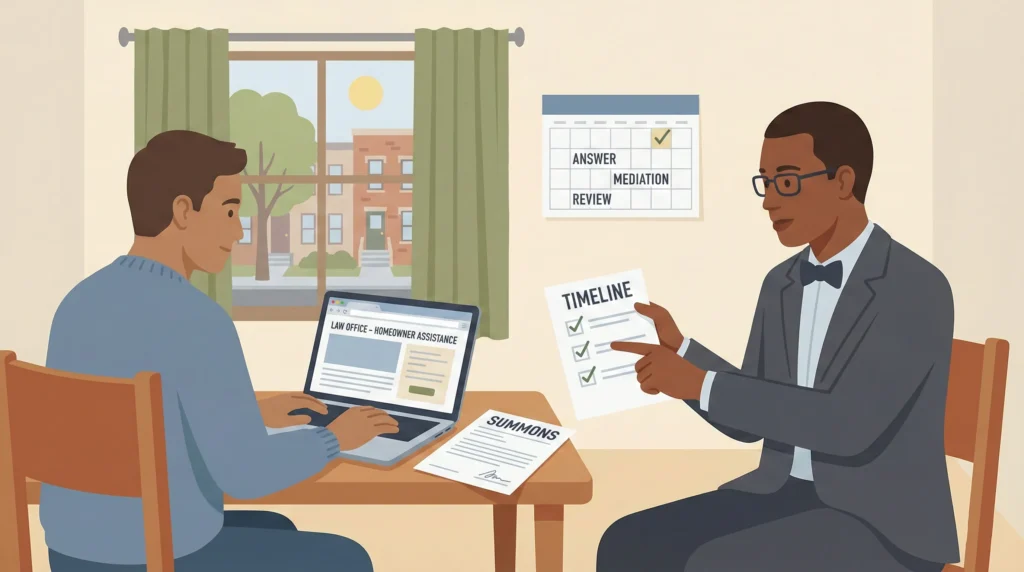
On our side, we built a full timeline based on the complaint, the loan history, and the family income. We made defense choices that matched the options described in our main foreclosure defense overview for Chicago owners. At the same time, we guided the owner through the Cook County foreclosure mediation process, making sure they had documents ready and understood what mediation could and could not do.
There were tense moments. The servicer requested more documents than seemed reasonable. There were delays and mixed messages, very similar to what we describe in the article on dual tracking in Illinois. The difference was that the owner kept answering our calls, kept sending documents on time, and kept showing up for court dates.
The case did not resolve in a single magical hearing. It resolved because the owner and our office respected each step on the timeline and kept pressure on both the court and the servicer.
In the end, a loan workout came together that the family could actually afford. It was not perfect. The payment was still a stretch. But the foreclosure case ended, the judgment never turned into a sale, and the owner stayed in the house. When they later listened to our conversation with Jamie McDaniel on the Bow Tied in Real Estate podcast, they said it felt like hearing their own story with different names.
The second story involves a small two flat on the Northwest Side. The owner lived in one unit and rented the other. When the foreclosure case started, they were already behind on taxes and repairs. They found us through the Mahmoud Faisal Elkhatib attorney profile while searching for someone who understood both foreclosure and Chicago investment property.
From the beginning, this owner had a clear but painful realization. Keeping the building did not make sense long term. The numbers in their budget, once we walked through them, looked a lot like the scenarios we talk about in our what happens after foreclosure in Illinois guide. The real question was whether they would lose the building at a sheriff sale or exit on terms they could live with.
We built a plan around three tracks:
The building eventually sold in an ordinary sale, not at auction. The owner did not walk away rich, but they walked away with a plan, with time to move, and with far less chaos than if they had let the case drift into a sheriff sale on the court schedule.
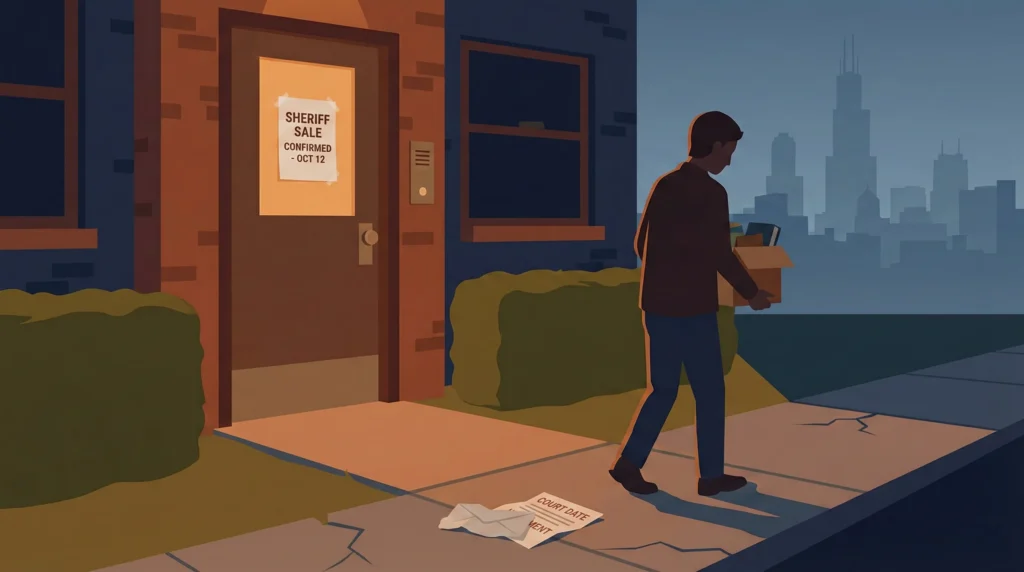
The third story is the one that keeps us up at night. It is also the one that most closely matches what many people are feeling when they first sit down to read this. A condo owner on the West Side had been in a long, slow slide. Late payments turned into a foreclosure case. The court sent notices. The servicer called and sent letters. Friends mentioned getting a lawyer, but the owner was exhausted and embarrassed.
By the time they found our page for Chicago foreclosure attorney help and reached out, three key things had already happened:
We still looked for options. Sometimes there are defects in service or sale procedures. Sometimes there is a narrow path to challenge the result. But in this case, the record looked a lot like the clean timeline we show in the what happens after foreclosure article, not the contested version in our defense guides. There were no objections on file, no mediation referrals, no earlier motions asking the court to slow down.
The owner still had important questions about move out timing, deficiency risk, and life after the case. Those are topics we cover in depth in that same after foreclosure guide. What we could not do was rewind the clock and recreate leverage that had been allowed to expire one deadline at a time.
On the surface, these stories look different. A single family home, a two flat, a condo. Different neighborhoods. Different lenders. Different personal histories. Underneath, they share the same structure you see outlined in our foreclosure article category and in pieces like Foreclosure Defense in Illinois and How Foreclosure Mediation Works in Illinois.
In every file, there is a point where the owner realizes things are serious. There is a choice about whether to respond to the complaint, whether to show up for hearings, whether to engage with mediation or negotiation, and whether to accept that keeping the property might not be realistic. The people in the first two stories did not make perfect choices. They made timely ones. The person in the third story waited until the court and the lender had written most of the ending without them.
That is why so many of our resources, from the Chicago foreclosure attorney page to podcast episodes like our conversation with Tiffany Watkins and Two Bald Brokers and a Bow Tie, come back to timing and leverage. The law gives you tools. The calendar decides which ones are still on the table.
If you are not sure whether your file looks more like the saved house, the planned sale, or the too late condo, send us your papers through the Foreclosure Defense Law Office contact form. We will line your dates up against the defense timeline and the after foreclosure guide so you can see what is still possible.
Reading other people’s stories only helps if you are willing to place yourself honestly on the map. That is why so many of our articles invite you to look at your own notices, not just general rules.
You can start by asking a few concrete questions:
Your answers do not have to be perfect. The point is to stop treating your case as a fog and start treating it as a path with real steps. Once you know roughly where you are, it becomes easier to see which tools are still on the table and which endings are most realistic.
My name is Mahmoud Faisal Elkhatib, and people call me The Bow Tie Attorney. My work is not just about drafting documents. It is about helping Chicago property owners and small landlords protect what they have built when the stakes are high. That includes telling the truth about how cases actually end.
Some readers of this article will save their homes. Some will sell in a controlled way and move into a better chapter. Some will come to us after key dates have passed, and our work will shift to landing as safely as possible instead of undoing what is already done. In every version, our goal is the same as the one you see across the foreclosure category and our podcast library: clear next steps based on facts, documents, and deadlines.
You do not have to turn your life into a perfect success story. You do not have to pretend this is easy. What you can do, starting today, is refuse to be the person in the third story who waited until the system finished the story without them. If you are ready to move from guessing to planning, we are ready to help.
If you see yourself in any of these Chicago foreclosure stories, schedule a strategy session with The Bow Tie Attorney, Mahmoud Faisal Elkhatib, through the Foreclosure Defense Law Office contact page. Bring your notices, your dates, and your questions. We will connect them to the Illinois foreclosure defense roadmap so you can move from worrying about the ending to taking action in the middle.
Yes. Each story in this article is based on real files our office handled for Chicago area homeowners and small landlords. To protect privacy, we anonymize and blend details, but the turning points, legal tools, and emotional themes are taken from actual cases. If you want to see how those patterns fit into the formal process, you can compare them with our guides on foreclosure defense and what happens after foreclosure.
It is rarely helpful to assume it is too late without letting someone who works in this area every day look at the record. Even when a sale has been held or confirmed, there are still important questions about timing, deficiency risk, and next steps. Our article on what happens after foreclosure in Illinois explains some of those issues. The sooner you reach out through the contact page, the more realistic options we are likely to have.
There is no single magic date, but earlier is almost always better. Calling us when you first receive a complaint or notice of default gives us more room to use the strategies in our foreclosure defense guide and to explore mediation as described in our mediation article. Waiting until there is already a judgment or a sale on the books limits what any lawyer can realistically do.
We start with your goals and your numbers, not a one size fits all rule. In some cases, like the first story in this article, preserving the home fits both the facts and the budget. In others, like the two flat story, a controlled sale is the smartest path. Our job is to explain how each path lines up with the legal process and the financial reality, drawing on resources like our foreclosure article hub and real estate category so you can make an informed choice.
That concern is valid. When foreclosure pressure hits, scammers and unqualified operators show up fast. We wrote a full article on foreclosure scams in Illinois to help you spot red flags. You can also hear us talk through real world scam patterns in podcast episodes like Bow Tied in Real Estate with Jamie McDaniel. A good starting point is to confirm that any lawyer you speak with is listed properly on the EV Häs site or on the Illinois attorney registry.
Most new clients tell us the same thing after their first conversation. They feel less alone and less confused. We start by asking what papers you have received, which pieces of our content you have already seen, such as the foreclosure defense overview or the article on meeting The Bow Tie Attorney, and where you are on the timeline. Then we talk about what is realistic, what we can do together, and what you can start doing this week. The goal is not to promise a perfect ending. It is to move you from vague fear to a concrete plan grounded in how Cook County cases really unfold.

Stay ahead of industry changes with our comprehensive continuing education program. New courses added monthly, covering everything from legal updates to market trends.
Connect with like-minded professionals who share your commitment to excellence. Build relationships that last beyond any single transaction or market cycle.
Position yourself as the go-to expert in your market. Our advanced certifications and specializations help you stand out in an increasingly competitive landscape.
“Excellence is not a skill, it’s an attitude. In real estate, that attitude translates to meticulous preparation, unwavering ethics, and an uncompromising commitment to client success.”
— Mahmoud Faisal Elkhatib, The Bow Tie Attorney